
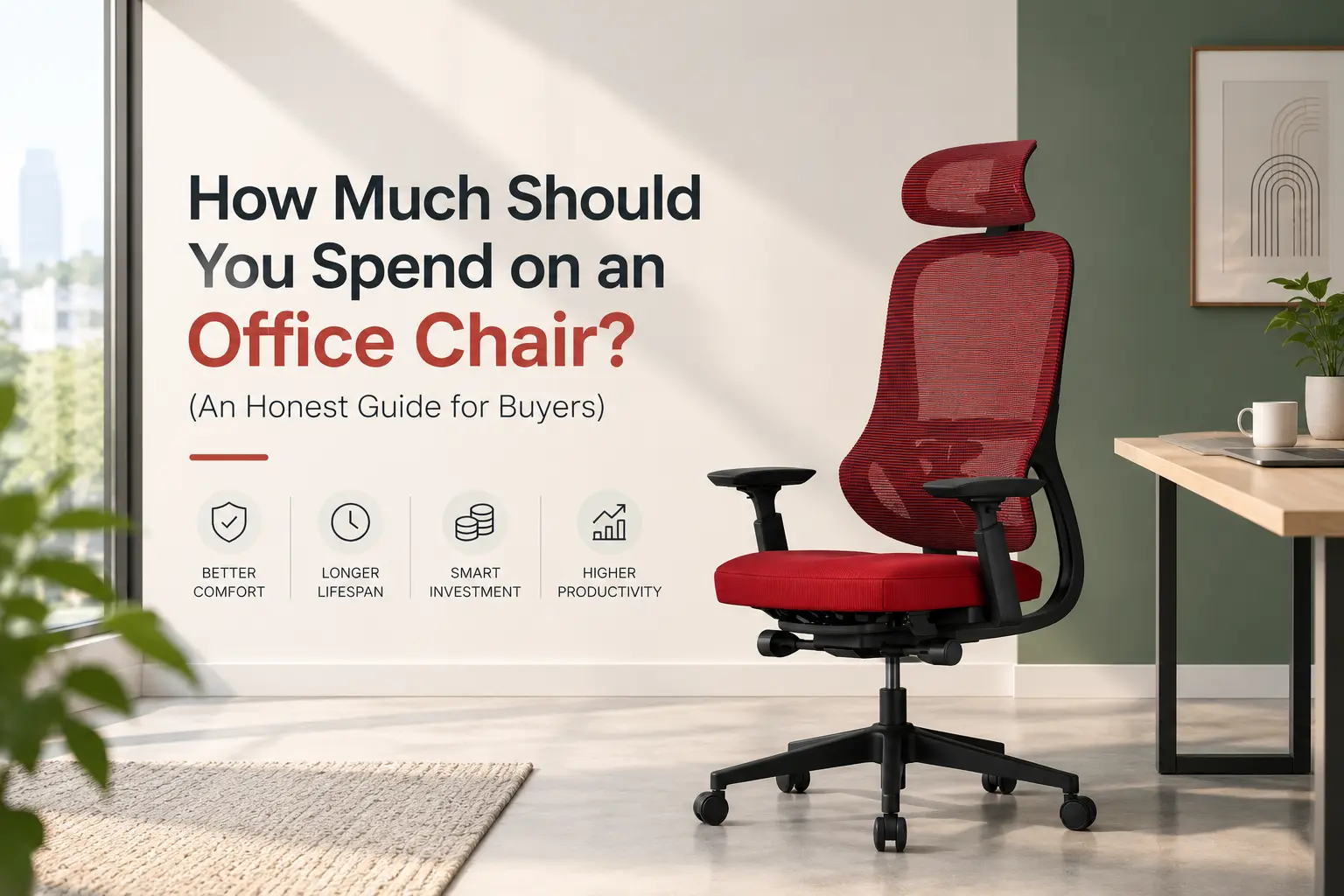
There is no single right answer to this question, and any guide that gives you one number is oversimplifying. But there is an honest way to think about it, and it has less to do with the price on the label than most people assume.
The real question is not how much a chair costs. It is how much it costs per year of the time you actually use it. Once you look at spend that way, the decision usually gets a lot clearer.
Why Is Price Alone the Wrong Way to Think About This?
A chair that costs £150 and a chair that costs £450 look like very different purchases on the day you buy them. But price on its own tells you almost nothing about value unless you also know how long each chair is going to last.
A £150 chair that needs replacing after two years costs £75 a year. A £450 chair that lasts nine years costs £50 a year. The second chair is cheaper, even though it costs three times as much upfront. This is the calculation that most buyers skip, and it is the one that actually matters.
The price tag tells you what you pay today. Cost per year of use tells you what the chair actually costs. They are rarely the same number.
How Do You Actually Work Out Cost Per Year?
The calculation is simple. Take the purchase price and divide it by the number of years you realistically expect the chair to remain in good working condition. That gives you an annual figure you can genuinely compare across different options, regardless of how different the upfront prices look.
The tricky part is estimating lifespan honestly. A chair with a two-year warranty is telling you something about how long the manufacturer expects it to last. A chair backed by a ten-year warranty is making a very different claim, and a much bigger one. Our guide to office chair benefits covers what genuine build quality contributes to how long a chair actually holds up.
A worked example
Chair A costs £180 with a two-year warranty. If it needs replacing on schedule, that is £90 per year, before accounting for delivery, disposal, and the time spent reordering. Chair B costs £550 with a ten-year warranty. Assuming it lasts the full term, that is £55 per year. Chair B costs three times more to buy and roughly 40 percent less to own.
This is not a hypothetical. It is the actual arithmetic behind why a ten-year warranty is one of the most useful numbers on a product page, not just a marketing detail.
What Does the Extra Money Actually Buy You?
The price gap between a budget chair and a genuinely well-built one is not arbitrary. It reflects specific differences that determine whether a chair lasts two years or ten.
- Higher-density foam that holds its shape rather than compressing permanently within months.
- A mechanism built to withstand daily mechanical stress without sticking or failing.
- A frame and base tested to a commercial standard, such as UKAC-5459 or BS 5459 Part 2, rather than assumed to be durable.
- Design features like floating lumbar support and weight-balanced recline that genuinely improve comfort, not just marketing language describing them.
This is the difference between a chair that is described as ergonomic and one that actually functions that way over years of use. Our guide to what makes an office chair truly ergonomic goes into the specific design features worth paying for.
Is There Ever a Good Reason to Spend Less?
Yes, and an honest guide should say so. If you are buying a chair for genuinely occasional use, a short-term setup, or a role that rarely involves sitting at a desk for extended periods, the cost-per-year calculation looks different because the wear on the chair is lighter and the consequences of a shorter lifespan matter less.
The calculation changes again for shared or hot-desking environments, where a single chair sees far more cumulative hours of use across a working week than an individually assigned one. In those cases, the cost-per-year math actually favours spending more, not less, because a lower-quality chair fails faster under the higher usage. Our guide to choosing office chairs for large teams covers how usage intensity should factor into a bulk procurement decision.
How Do You Know If You Are Overpaying?
Price does not scale perfectly with quality past a certain point. A very high price does not automatically mean a longer lifespan or better support, and some of the premium can be brand markup rather than genuine engineering difference. The most reliable signals are independent certification, a warranty length the manufacturer is genuinely prepared to honour, and specific design features rather than vague descriptive language. Our comparison of ergonomic chairs versus standard chairs covers what actually separates the two categories.
A high price with no certification and a short warranty is just as risky a purchase as a low price with the same gaps. The signals to check are the same either way.
Frequently Asked Questions
What is a reasonable budget for a good office chair?
For a chair intended for daily desk work over several years, a budget in the range of £300 to £600 typically buys genuine commercial-grade construction, independent certification, and a meaningful warranty. Below that range, lifespan and support quality tend to drop off noticeably. Above it, the gains become more marginal unless specific features justify the difference for your particular needs.
Is it worth spending more on an office chair if I work from home?
If you are using the chair for regular desk work, yes, the same cost-per-year logic applies regardless of whether the chair is in an office or a home setup. The hours of use are what determine wear, not the location.
How do I compare chairs with different warranty lengths fairly?
Divide the purchase price by the warranty length to get a baseline cost-per-year figure, then adjust based on how confident you are that the chair will actually last that long. Independent certification and manufacturer reputation both affect how much weight to put on the warranty figure itself.
Does a more expensive chair always mean better ergonomics?
No. Price and ergonomic quality are correlated but not identical. Some of what you pay for in premium seating is brand and design rather than functional improvement. Checking for specific features like floating lumbar support, weight-balanced recline, and independent certification tells you more than price alone. Our guide to signs you need a new office chair is also useful for recognising when your current chair has genuinely reached the end of its useful life, rather than assuming a bigger budget automatically fixes discomfort.
Key Takeaways
- Cost per year of use is a more honest measure than purchase price alone.
- A cheaper chair replaced every two years often costs more over a decade than a well-made chair bought once.
- Warranty length is one of the clearest indicators of how a manufacturer expects the chair to perform over time.
- The price difference between budget and commercial-grade seating reflects genuine differences in materials, mechanisms, and testing.
- Higher price does not automatically mean better quality; independent certification and specific features matter more than the number on the tag.
The Honest Answer
How much you should spend on an office chair depends on how long you expect to use it and how much that time is worth to you. But once you divide any price by realistic years of service, the picture usually becomes clear. A chair with genuine certification and a long warranty tends to cost less per year than one that looks cheaper on the day you buy it.
See how the JH Chairs ergonomic range stacks up against the cost of replacing a cheaper chair every two years. Every chair carries a ten-year warranty and UKAC-5459 certification, with next-day dispatch across the UK and Ireland and no minimum order required.